


$11 – $130Price range: $11 through $130

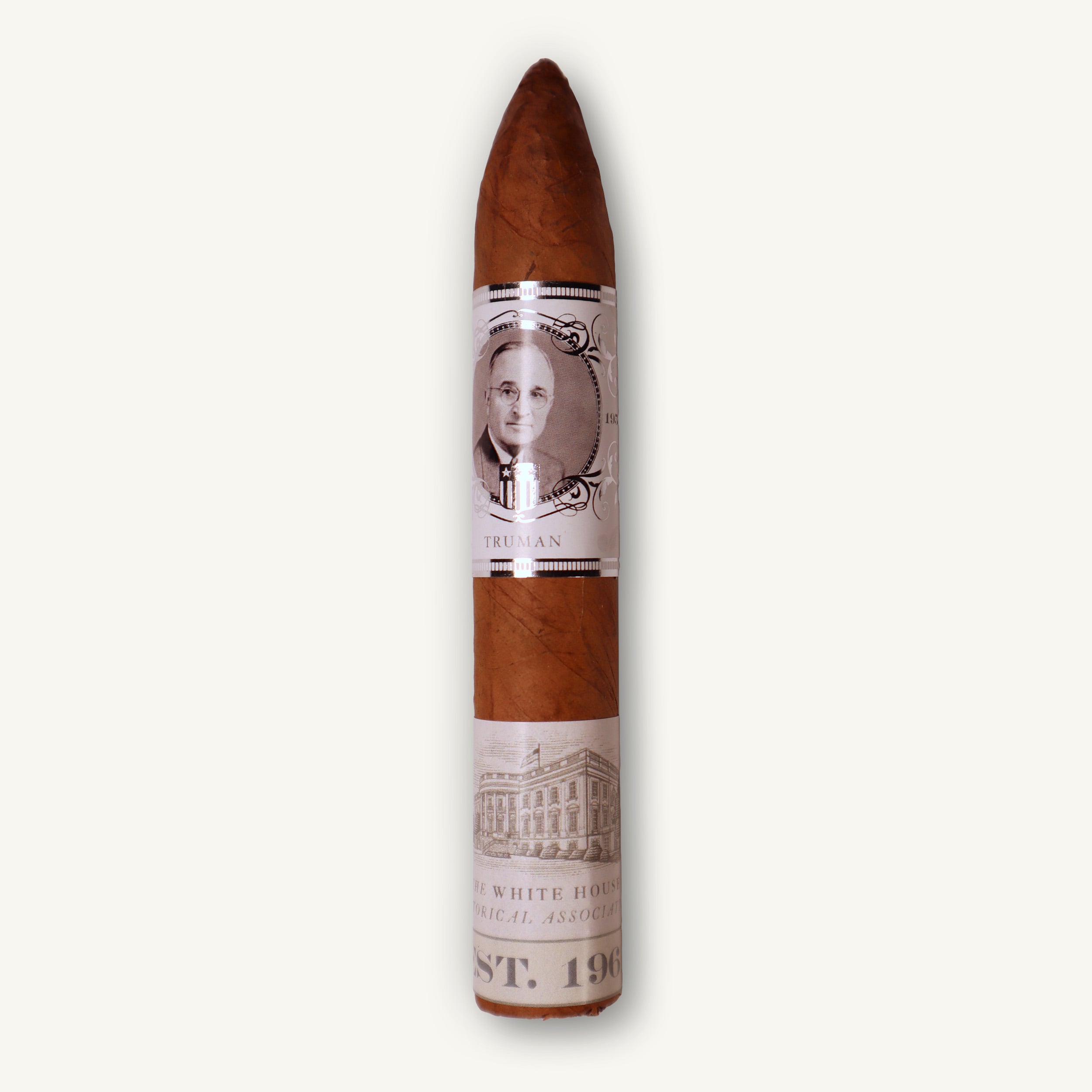
The innumerable tasks looming on the war-darkened horizon the day President Franklin D. Roosevelt died and Vice President Harry S. Truman ascended to the daunting office of Commander in Chief were a hefty load for a new president. A Missourian by birth, Truman would become the single most important decision maker on issues with Soviet Russia, the reconstruction of war-ravaged Europe, the detonation of the atomic bomb over Japan, and the reconstruction of the post-war United States. Truman also faced issues of communism, astronomical scientific breakthroughs, and government aid programs. With a country that had been rushed into war, Truman faced the providential appointment to preside over the country that overcame Germany and Japan, and then ushered the same country into a time of turbulent peace.
Within days of his swearing in, Truman tackled the mountainous task of briefing himself on the policies, and a few secrets, of war left to him by Roosevelt. Characteristically a studious learner, Truman spent numerous hours in Roosevelt’s Map Room, acquainting himself with Secretary of War Henry Stimson, a longtime member of the War Department, who would later be awarded by President Truman with a Distinguished Service Medal. The secretive construction of the atomic bomb was quickly made known to Truman who was soon to make the important decision of its use to end the war in the Pacific.
On the war-beaten ground of Germany, Truman, Churchill, and Stalin met at Potsdam, where Truman proved to be as straightforward and to the point with world leaders as he was with domestic politicians. Never having met either Churchill or Stalin, Truman evaluated the one as an aging lion, who talked “a lot of hooey;” and as for Stalin, he determined that he liked the man—much later, he would change his mind. Churchill likewise evaluated Truman as a “man of immense determination,” taking “no notice of delicate ground, he just plants his foot down firmly upon it.” This characterization of Truman would remain constant through the Potsdam conference, into the end of the war with Japan, and afterward. Although Truman remained constant and straightforward, he failed to see through Stalin’s grand composure and stiff façade. Little did Truman understand the power of the Red Army and Soviet Russia.
Truman’s popularity wore thin as an unstable economy rocked the workforce. Because wages were so low, strikes set in and soon whole companies and factories were shut down, starting with the steel companies, then the coal; when the railroad called a strike, the entire country shut down its railway system. The antagonist was John Lewis, whom Truman detested but had to face if he was going to resolve the crisis. Unlike the wartime troubles or the growing fears of Communist espionage, the labor strike had to be broken for the practical purpose of functioning. To halt the strikers, Truman decided to draft them! The draft never took place because Lewis rescinded the strike, and the railroads were back on track.
The growing tensions with Russia became a tangible crisis when Stalin broke all of his wartime promises, starting with the imprisonment of non-Communist Polish politicians accused of “terrorism.” These overseas atrocities committed by the fascist regime were working their scare tactics on America as well, with Communist espionage rings. “I do not think we should play compromise any longer…” said the exasperated Truman, “I am tired of babying the Soviets.” Inviting Winston Churchill to speak in Fulton, Missouri, Truman made a public show of anti-Communism, but it was Churchill who spoke the immortal words: “From Stettin in the Baltic to Trieste in the Adriatic, an iron curtain has descended across the continent…” The balance of power had been tipped, and Russia was making a surge for the top.
At home, Truman decided to clean house and purge the administration of his predecessor’s New Dealers, the first of whom was Henry Wallace, the Agriculture Secretary and “profound admirer” of Stalin. Prior to World War II, much of the country held isolationist views, but since the Pearl Harbor attack, a new internationalist vision appeared. The danger was that America was no longer dealing with Hitler, but with Stalin, who had already tapped into the United States government. The purge turned from dispelling New Dealers to finding Communist infiltrators. Former government officials like David Lilienthal, also an old New Dealer, who had been Roosevelt’s spearhead for the Tennessee Valley Authority, were accused of Communist sympathies.
Concerned about the threat of Communism throughout Europe, and Greece and Turkey in particular, Truman asked one of his political advisors, Clark Clifford, to prepare a comprehensive analysis of Soviet-American relations. In 100,000 words, the report portrayed an ominous portrait of Soviet military power: “They are seizing every opportunity to expand the area, directly or indirectly, under Soviet control…” It was left to the Truman administration to confine their expansion; the logical first target was East Germany.
The threats to the infrastructure of the government prompted Truman to make a very Rooseveltian move with his “Truman Doctrine,” which proposed that the United States should “support free peoples who are resisting attempted subjugation by armed minorities or outside pressure…” Truman continued, “we must assist free peoples to work out their own destinies in their own way.” This proclamation to the “free people of the world” was a breakthrough for his popularity; no longer was he “Roosevelt’s stand in,” but he was his own man and in charge. Truman was as natural, confident, and straightforward as ever, but it was beginning to look good on him, and the American people liked it. With the “Truman Doctrine,” isolationism died once again for the United States, not to the point of war with Russia, but enough to make a statement that would stand strong through to the next generation.
Soon, Truman’s attention was drawn back to poverty-stricken Germany. The Soviets, it would seem, wanted to let the economy slide and drift in the wind while the people in the divided Germany starved. Russia had placed a blockade on roads, rails, and water, so the only way for the United States to enter Berlin was by air. On June 26, 1948, Truman sent air supplies to the blockaded West Berlin, known as the “Berlin Airlift,” on the wings of B-29 bombers.
Although he loathed the office of President and all the stress connected with its responsibilities, Truman believed he still had much to accomplish. As a realist, he looked past all of the struggles of the previous years and toward the future, with confidence and bravado, “rolling with the punches” as the New York Times would recall. Before the elections, Truman was able to bag a few more items before the next go-around. Although the American Communists were causing trouble, headed by the incorrigible Henry Wallace, issues of civil rights and the struggling Jewish nation of Israel weighed heaviest on his mind. “In effect,” wrote one historian, “Palestine and the destiny of Europe’s displaced Jews was another of those results of World War II—like the bomb and the presence of the Red Army in Eastern Europe—that had been left for Truman to face.” Not only did he face the issue, but he was the first world leader to call Israel a nation.
After winning the turbulent election cycle, Truman’s “containment” policy regarding the spread of Communism in Europe and in Asia was put to the ultimate test. The Truman Doctrine, the Marshall Plan, and the Berlin Airlift were all part of efforts to isolate and contain the spread of Communist control; these foreign policies would soon apply in Korea. In 1950, Communist North Korea declared war on the South, a civil conflict that would embroil both Britain and the United States under the measures recommended by the United Nations. The attack by North Korea had come as a complete surprise, but Truman was determined that Communists should not be permitted to “force their way in.”
As the war raged in Korea, with China also embroiled, it was important to Truman that it not escalate into another global conflict. To establish peace with Korea, Truman settled on an armistice. The Korean War remained a sore point in the Truman administration, but, as always, Truman maintained his positive outlook and cool confidence. Nearly assassinated twice and fraught with hateful press and unfaithful friends, Truman left the presidency as a man vilified for mediocrity and “soft” policy, but who fought against communism that was marching over the rights of free people throughout the world.
The innumerable tasks looming on the war-darkened horizon the day President Franklin D. Roosevelt died and Vice President Harry S. Truman ascended to the daunting office of Commander in Chief were a hefty load for a new president. A Missourian by birth, Truman would become the single most important decision maker on issues with Soviet Russia, the reconstruction of war-ravaged Europe, the detonation of the atomic bomb over Japan, and the reconstruction of the post-war United States. Truman also faced issues of communism, astronomical scientific breakthroughs, and government aid programs. With a country that had been rushed into war, Truman faced the providential appointment to preside over the country that overcame Germany and Japan, and then ushered the same country into a time of turbulent peace.
Within days of his swearing in, Truman tackled the mountainous task of briefing himself on the policies, and a few secrets, of war left to him by Roosevelt. Characteristically a studious learner, Truman spent numerous hours in Roosevelt’s Map Room, acquainting himself with Secretary of War Henry Stimson, a longtime member of the War Department, who would later be awarded by President Truman with a Distinguished Service Medal. The secretive construction of the atomic bomb was quickly made known to Truman who was soon to make the important decision of its use to end the war in the Pacific.
On the war-beaten ground of Germany, Truman, Churchill, and Stalin met at Potsdam, where Truman proved to be as straightforward and to the point with world leaders as he was with domestic politicians. Never having met either Churchill or Stalin, Truman evaluated the one as an aging lion, who talked “a lot of hooey;” and as for Stalin, he determined that he liked the man—much later, he would change his mind. Churchill likewise evaluated Truman as a “man of immense determination,” taking “no notice of delicate ground, he just plants his foot down firmly upon it.” This characterization of Truman would remain constant through the Potsdam conference, into the end of the war with Japan, and afterward. Although Truman remained constant and straightforward, he failed to see through Stalin’s grand composure and stiff façade. Little did Truman understand the power of the Red Army and Soviet Russia.
Truman’s popularity wore thin as an unstable economy rocked the workforce. Because wages were so low, strikes set in and soon whole companies and factories were shut down, starting with the steel companies, then the coal; when the railroad called a strike, the entire country shut down its railway system. The antagonist was John Lewis, whom Truman detested but had to face if he was going to resolve the crisis. Unlike the wartime troubles or the growing fears of Communist espionage, the labor strike had to be broken for the practical purpose of functioning. To halt the strikers, Truman decided to draft them! The draft never took place because Lewis rescinded the strike, and the railroads were back on track.
The growing tensions with Russia became a tangible crisis when Stalin broke all of his wartime promises, starting with the imprisonment of non-Communist Polish politicians accused of “terrorism.” These overseas atrocities committed by the fascist regime were working their scare tactics on America as well, with Communist espionage rings. “I do not think we should play compromise any longer…” said the exasperated Truman, “I am tired of babying the Soviets.” Inviting Winston Churchill to speak in Fulton, Missouri, Truman made a public show of anti-Communism, but it was Churchill who spoke the immortal words: “From Stettin in the Baltic to Trieste in the Adriatic, an iron curtain has descended across the continent…” The balance of power had been tipped, and Russia was making a surge for the top.
At home, Truman decided to clean house and purge the administration of his predecessor’s New Dealers, the first of whom was Henry Wallace, the Agriculture Secretary and “profound admirer” of Stalin. Prior to World War II, much of the country held isolationist views, but since the Pearl Harbor attack, a new internationalist vision appeared. The danger was that America was no longer dealing with Hitler, but with Stalin, who had already tapped into the United States government. The purge turned from dispelling New Dealers to finding Communist infiltrators. Former government officials like David Lilienthal, also an old New Dealer, who had been Roosevelt’s spearhead for the Tennessee Valley Authority, were accused of Communist sympathies.
Concerned about the threat of Communism throughout Europe, and Greece and Turkey in particular, Truman asked one of his political advisors, Clark Clifford, to prepare a comprehensive analysis of Soviet-American relations. In 100,000 words, the report portrayed an ominous portrait of Soviet military power: “They are seizing every opportunity to expand the area, directly or indirectly, under Soviet control…” It was left to the Truman administration to confine their expansion; the logical first target was East Germany.
The threats to the infrastructure of the government prompted Truman to make a very Rooseveltian move with his “Truman Doctrine,” which proposed that the United States should “support free peoples who are resisting attempted subjugation by armed minorities or outside pressure…” Truman continued, “we must assist free peoples to work out their own destinies in their own way.” This proclamation to the “free people of the world” was a breakthrough for his popularity; no longer was he “Roosevelt’s stand in,” but he was his own man and in charge. Truman was as natural, confident, and straightforward as ever, but it was beginning to look good on him, and the American people liked it. With the “Truman Doctrine,” isolationism died once again for the United States, not to the point of war with Russia, but enough to make a statement that would stand strong through to the next generation.
Soon, Truman’s attention was drawn back to poverty-stricken Germany. The Soviets, it would seem, wanted to let the economy slide and drift in the wind while the people in the divided Germany starved. Russia had placed a blockade on roads, rails, and water, so the only way for the United States to enter Berlin was by air. On June 26, 1948, Truman sent air supplies to the blockaded West Berlin, known as the “Berlin Airlift,” on the wings of B-29 bombers.
Although he loathed the office of President and all the stress connected with its responsibilities, Truman believed he still had much to accomplish. As a realist, he looked past all of the struggles of the previous years and toward the future, with confidence and bravado, “rolling with the punches” as the New York Times would recall. Before the elections, Truman was able to bag a few more items before the next go-around. Although the American Communists were causing trouble, headed by the incorrigible Henry Wallace, issues of civil rights and the struggling Jewish nation of Israel weighed heaviest on his mind. “In effect,” wrote one historian, “Palestine and the destiny of Europe’s displaced Jews was another of those results of World War II—like the bomb and the presence of the Red Army in Eastern Europe—that had been left for Truman to face.” Not only did he face the issue, but he was the first world leader to call Israel a nation.
After winning the turbulent election cycle, Truman’s “containment” policy regarding the spread of Communism in Europe and in Asia was put to the ultimate test. The Truman Doctrine, the Marshall Plan, and the Berlin Airlift were all part of efforts to isolate and contain the spread of Communist control; these foreign policies would soon apply in Korea. In 1950, Communist North Korea declared war on the South, a civil conflict that would embroil both Britain and the United States under the measures recommended by the United Nations. The attack by North Korea had come as a complete surprise, but Truman was determined that Communists should not be permitted to “force their way in.”
As the war raged in Korea, with China also embroiled, it was important to Truman that it not escalate into another global conflict. To establish peace with Korea, Truman settled on an armistice. The Korean War remained a sore point in the Truman administration, but, as always, Truman maintained his positive outlook and cool confidence. Nearly assassinated twice and fraught with hateful press and unfaithful friends, Truman left the presidency as a man vilified for mediocrity and “soft” policy, but who fought against communism that was marching over the rights of free people throughout the world.
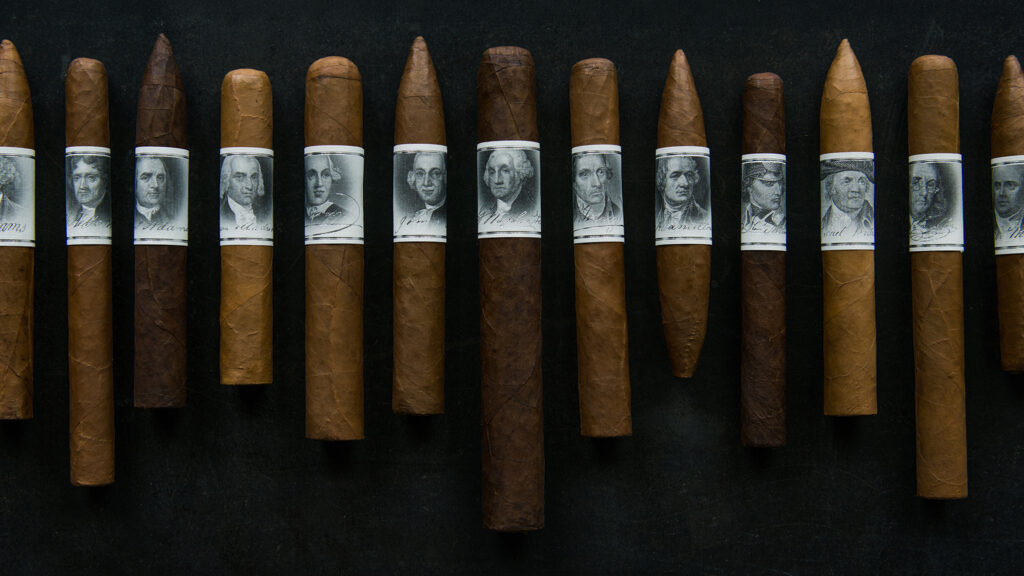
| Selections | Single, Box of 13 |
|---|
Join the Liberty Cigar Guild for exclusive content and to be the first to learn about our latest product launches, limited edition drops, and all things Liberty Cigars!
Reviews
There are no reviews yet.